
Mineral wool cavity insulation extraction
Mineral wool is the fill we take out more than any other. It's the fluffy fibre that was blown into a lot of cavity walls, and when it's been in for years it often isn't sitting the way it was meant to. We get it all out, down to the damp-proof course, and leave the wall clear.
What mineral wool is, and why it ends up coming out.
Mineral wool (you'll also hear it called rock wool, glass wool or just fibre) went into walls as loose tufts, blown through holes drilled in the outside leaf. When it's dry and evenly spread it does its job. The trouble starts when it isn't.
Fibre is a bit like a jumper. Once it gets wet, it holds on to the water and goes heavy, and it can drop and pack down towards the bottom of the wall. That can leave the upper part of the cavity with very little in it and the lower part packed tight and damp. Water can get in through weathered brickwork, failed pointing or a leaking gutter.
People usually call us because they've noticed something indoors: cold patches on an outside wall, damp marks or mould that keep coming back, a musty smell, or heating bills that have crept up. Others ring because a surveyor has flagged the cavity fill when they're selling or buying. Our guide to the signs your cavity wall insulation has failed goes through what to look for.
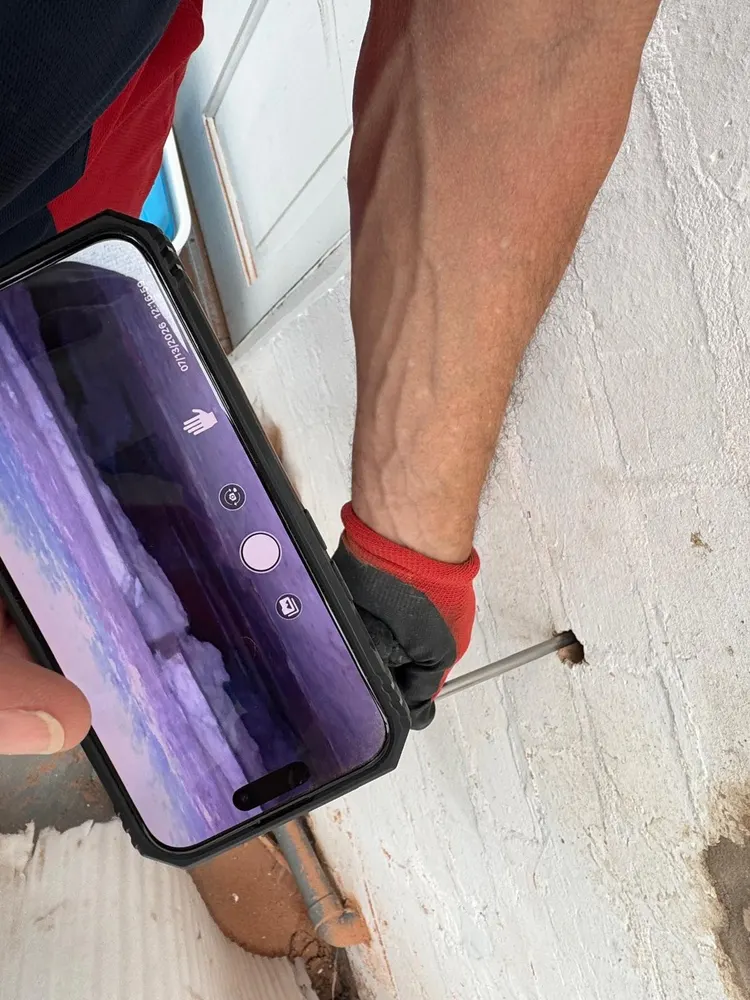
We check the wall before anything's booked.
Before any work is booked we look inside the cavity with a borescope, a small camera that goes in through a tiny hole, and you can watch the screen with us. It shows whether the fill is mineral wool and how it's sitting. We measure the wall area at the same time, because that sets the price.
We don't price a job from a guess. If it turns out not to be wool, we'll tell you. Beads and foam come out differently, and you can read about them on our polystyrene bead extraction and foam insulation extraction pages.
How we take mineral wool out.
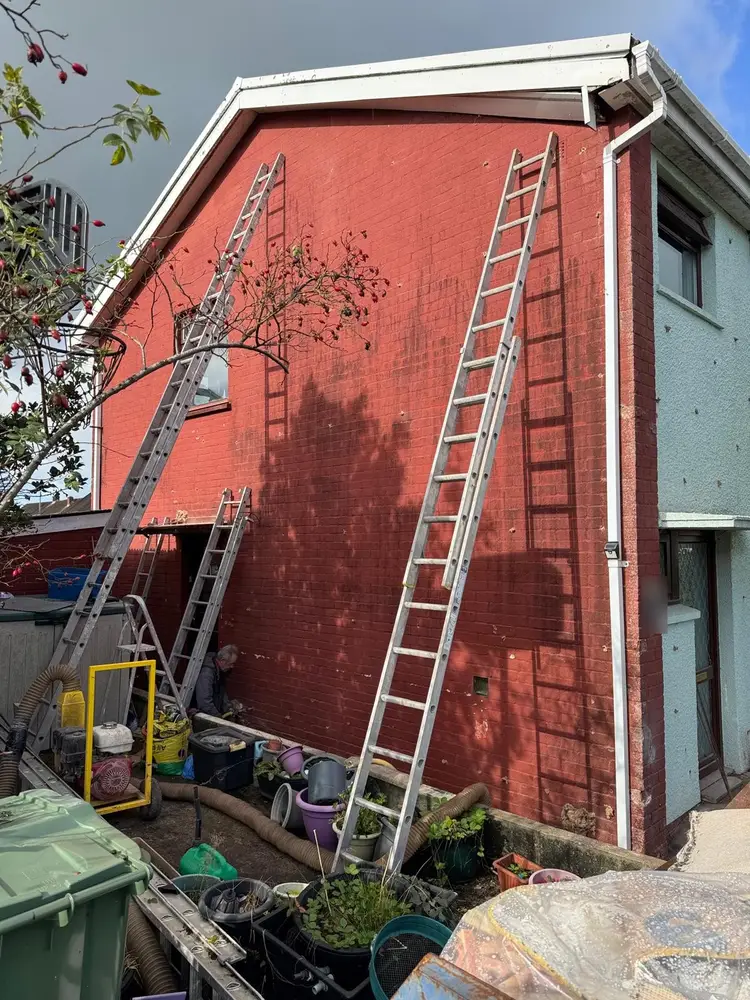
We drill the outer wall in a set pattern so the hose can reach the whole cavity, then vacuum the wool out all the way down to the damp-proof course. Every hole is filled and made good, air bricks go in to ventilate the empty cavity, and the wool is bagged for licensed disposal.
- We drill in a set pattern. Holes go into the outer leaf of brickwork at regular spacings across the wall, so we can reach every part of the cavity.
- We vacuum the wool out. A powerful extraction vacuum draws the fibre out through the holes and down the hoses into bags. Wool that's packed down or damp at the base takes more work, and we keep going until we're down to the damp-proof course.
- We fill and make good every hole. Every hole we've drilled is filled and finished, so the wall is sealed up again once the cavity is empty.
- We fit air bricks. These let air move through the cleared cavity so it can dry out and stay ventilated.
- We take the waste away. The removed wool is bagged up and goes off for licensed disposal. Nothing's left on your drive.
What you get at the end.
When the job's done you get photos of the empty cavity, taken through the wall after extraction, so you can see for yourself that it's clear. You also get a certificate of removal. If you're selling, or a surveyor or mortgage lender has asked about the cavity, that paperwork is what they'll want to see.
We're fully insured, and we're happy to send a copy of the certificate if you'd like to see it before booking.
What mineral wool removal costs.
Our estimator works mineral wool out at £21 per square metre of wall (as of November 2026), with a minimum job of £1,250. The square metres come from the type of house, the number of storeys and how many walls need doing. A two storey semi with three or four walls comes to about £3,110.
For a fuller explanation, including how the wall area is worked out, see our cavity wall insulation removal cost guide.
Want a figure for your own house? The free estimator on our home page gives you a guide price in about a minute. It's a guide, not a quote. Your fixed price comes after the borescope check, once we've seen the wall.
Where we do this work.
We're based in Llanelli and most of our wool extraction jobs are across South Wales, from Pembrokeshire and Carmarthenshire through Swansea and Bridgend to Cardiff and Newport. We take enquiries from across the UK too, so it's worth a call wherever you are. Enquiries from the north of England are passed to our partner, CavExtract.
Mineral wool questions.
How do I know if my walls have mineral wool in them?
Sometimes the paperwork from when it was installed says so, but often there isn't any. The borescope check settles it. We look at the fill on camera before giving you a fixed price.
Can you take out just one wall?
Yes. If only one or two walls are causing problems, we can price those. The estimator asks how many walls need doing for exactly that reason. Bear in mind the minimum job is £1,250.
Will it make a mess?
The work is done from outside, through the outer wall, and the wool goes straight down the hoses into bags. We clear up and take everything away with us when we leave.
Can I remove mineral wool myself?
We wouldn't recommend it. Getting all of it out, especially wool that's packed down at the base, needs extraction kit, a proper drilling pattern and a way to dispose of the waste legally. You'd also have nothing to show a buyer or surveyor afterwards.
What happens to the cavity afterwards?
It's left empty and ventilated by the air bricks we fit. You'll have the photos and the certificate showing it's clear. If you're thinking about what to do with it next, ask us on the survey and we'll talk it through.
Not sure whether it's wool, beads or foam in your walls? Have a look at our cavity wall insulation removal page for an overview, or just ring us and we'll help you work it out.
Get a guide price for your walls.
Our online estimator gives you a guide price in about a minute. Or ring us and we'll talk it through.
Get my free estimateCall 07728 291907